Abstract
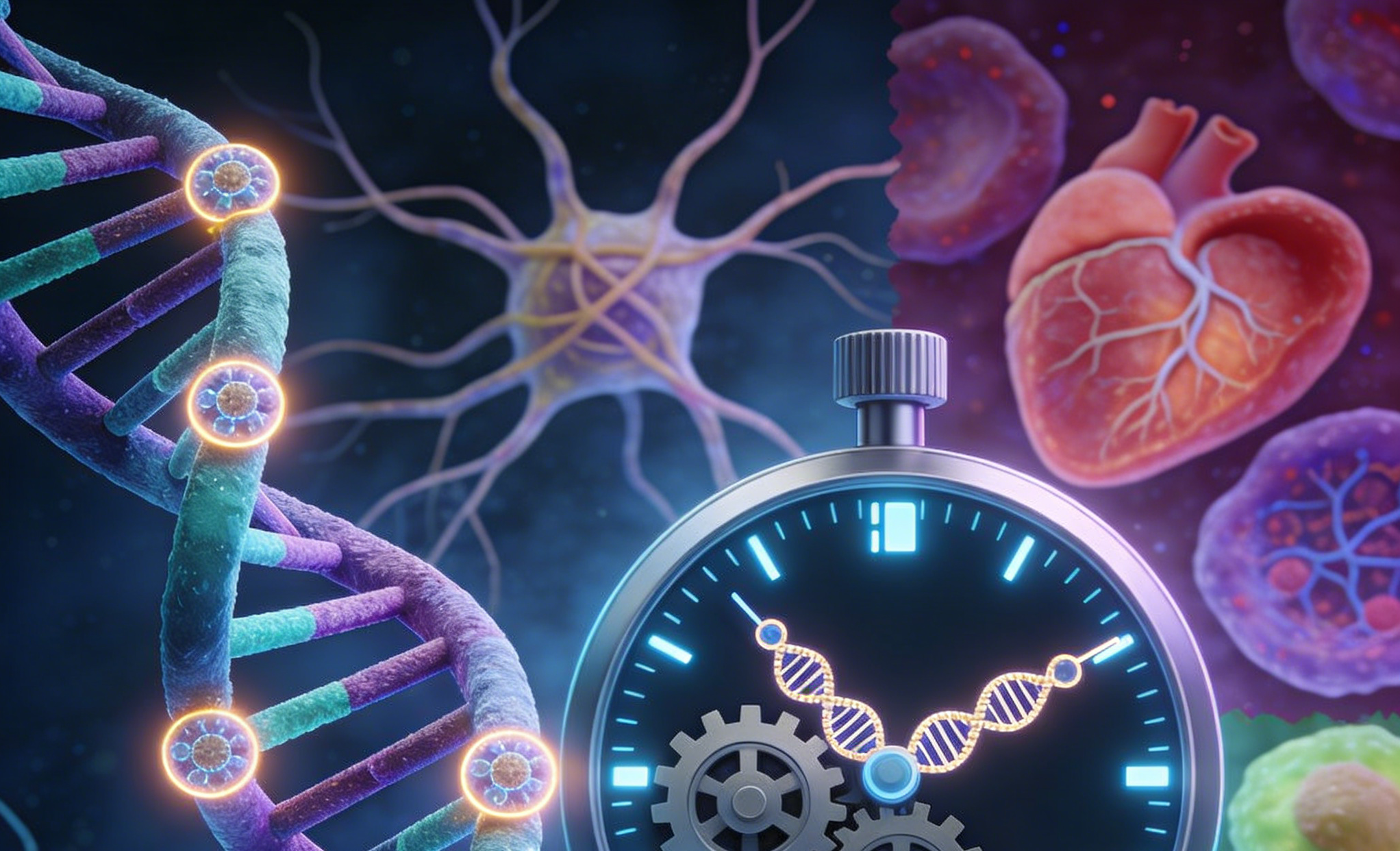
DNA methylation-based “epigenetic clocks” can precisely quantify biological age and predict risk for multiple chronic diseases and mortality. This article evaluates the potential of second-generation clocks (e.g., GrimAge, PhenoAge) as clinical tools for early screening of age-related diseases (e.g., Alzheimer’s, CVD, cancer). Furthermore, we focus on their application in quantifying the effects of lifestyle (diet, exercise), pharmacological (e.g., metformin, rapalogs), and emerging (e.g., senolytics) anti-ageing interventions, building a case for their feasibility as surrogate endpoints in clinical trials.
Proposed Structure
- Introduction: Ageing demographics, limitations of chronological age, epigenetic clock concept.
- Clocks and Disease Prediction: Comparing the performance of different clocks in predicting morbidity and mortality.
- Screening Potential: Identifying high-risk individuals with “accelerated ageing.”
- Intervention Assessment Tool:
- Lifestyle: Reversal effects of caloric restriction, exercise.
- Pharmacological: Evaluating senolytics, mTOR inhibitors.
- Trial Design: Advantages/challenges of using epigenetic age acceleration as a surrogate endpoint.
- Limitations: Cost, tissue specificity, causality, ethical considerations.
- Conclusion & Outlook: Advocating for standardised assays and large prospective studies to validate clinical utility.
Key References
- Horvath, S., & Raj, K. (2018). DNA methylation-based biomarkers and the epigenetic clock theory of ageing. Nature Reviews Genetics, 19(6), 371-384.
- Lu, A. T., et al. (2019). DNA methylation GrimAge strongly predicts lifespan and healthspan. Aging, 11(2), 303-327.
- Fitzgerald, K. N., et al. (2021). Potential reversal of epigenetic age using a diet and lifestyle intervention: a pilot randomized clinical trial. Aging, 13(7), 9419-9432.